
In this guide, we will walk through the practical steps of family medicine cabinet organization, how to create a safer storage system, prepare important health information, and build habits that make managing your family’s health easier.
Most families have a medicine cabinet, but many only think about it when someone is already sick. A child wakes up with a fever in the middle of the night, someone needs allergy medicine during a busy morning, or a family member needs a first aid item quickly. You open the cabinet expecting to find what you need, but instead, you discover half-used bottles, expired products, missing labels, and items you cannot remember buying.
For busy moms, managing family health can already feel like a full-time responsibility. Between school schedules, meals, appointments, work, and everyday routines, organizing medicines may not feel like a priority. However, a disorganized medicine cabinet can create unnecessary stress when your family needs quick and safe solutions.
A well-organized family medicine cabinet is not about having a large collection of products. It is about creating a simple system that helps you know what you have, where everything is located, and when something needs attention.
With the right organization system, you can:
- Find important health supplies more easily
- Reduce confusion during stressful moments
- Keep track of expired or unused products
- Store medicines more safely
- Help caregivers understand your family’s medication routine
As a pharmacist, I know that many medication mistakes do not happen because parents do not care. They often happen during busy moments when families are tired, rushed, or unsure about what they have at home. A simple organization routine can make it easier to use medicines safely and confidently.
The 7-Step Family Medicine Cabinet Reset
A medicine cabinet reset does not need to feel overwhelming. You do not have to buy expensive organizers or completely redesign your storage space.
The goal is simple: create a system where your family can easily understand what you have, where it belongs, and how to maintain it.
These seven steps will help you create a more organized and practical medicine cabinet.
Step 1: Choose a Safe Storage Location
Before organizing your medicines, start by choosing the right place to store them. The location you choose can affect how easy it is to maintain your system and how safely medicines are stored.
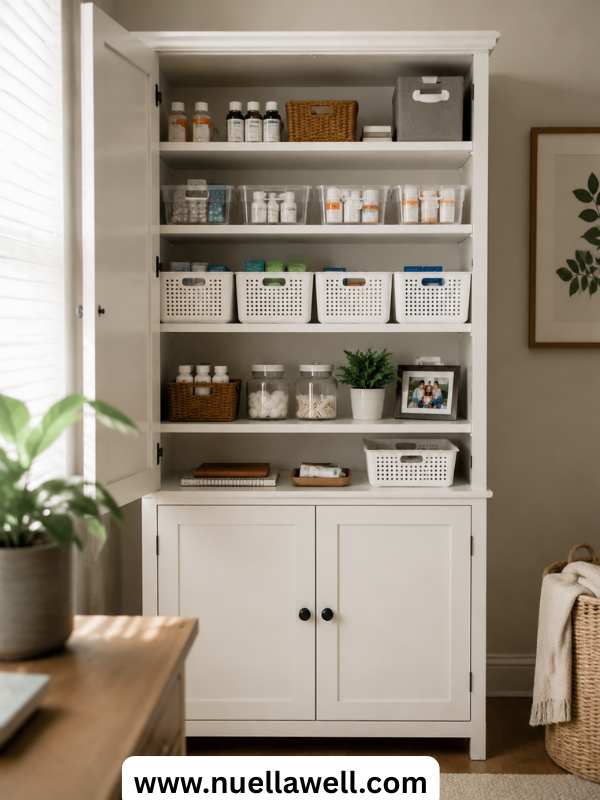
Many families keep medicines in bathroom cabinets because it feels convenient. However, areas with frequent heat and moisture may not always be the best option for storing some products.
Choose a storage area that is:
- Cool and dry
- Away from direct sunlight
- Easy for responsible adults to access
- Secure from young children
The best location will depend on your home and your family’s needs.
Choose a location that is cool, dry, and away from children, following safe medicine storage recommendations.
Consider Your Family’s Routine
Think about how your family actually uses medicines.
Ask yourself:
- Who usually manages medicines in the home?
- Do you have young children?
- Does another caregiver help with childcare?
- Does anyone use regular prescription medicines?
- Do you need quick access to certain health supplies?
A good system should fit into your daily life.
Organization systems can make daily motherhood tasks easier. After preparing your health supplies, you can also create calmer daily habits with our guide on how to create a postpartum morning routine.
Keep Medicines Safe From Children
Families with young children should consider safe storage practices. Medicines should be stored in a location where children cannot easily access them.
Helpful habits include:
- Returning medicines to their storage area after use
- Avoiding leaving medicines on counters or tables
- Keeping products away from places children commonly explore
- Teaching children that medicines should only be used with adult guidance
The goal is to create a system that allows adults to find what they need while keeping children protected.
It is essential to focus on keeping medicines out of reach of children to prevent accidental ingestion.
Create One Main Storage Area
One common reason medicine cabinets become cluttered is that products end up scattered throughout the home.
One bottle stays in the kitchen. Another is placed in a bedroom drawer. First aid supplies disappear into different bags.
Having one main storage area makes it easier to know what your family has.
You may still keep certain items separately when necessary, but having a central location for most health supplies helps reduce confusion.
Choosing the right storage location is the foundation of an organized medicine cabinet. Once your family has a safe and practical place for medicines, the next step is deciding what actually belongs there.
Step 2: Remove Expired and Unnecessary Medicines
Before adding labels, containers, or new storage solutions, the most important step is knowing what you already have. Many medicine cabinets become crowded because old products are kept long after they are needed.
A medicine cabinet should not be a collection of forgotten items. It should contain products your family can identify, understand, and manage confidently.
Take Everything Out and Review Each Item
Trying to organize a crowded cabinet without removing the contents can make the process more difficult.
Start by placing everything on a clean surface so you can review each item properly.
For every product, ask:
- Do I know what this is?
- Is the label clear and readable?
- Is this still needed?
- Is it within its expiry period?
- Do I know who it belongs to?
- Do I know why it was originally used?
If you are unsure about a medicine, do not guess. A pharmacist or healthcare professional can help answer questions about specific products
Step 3: Create Simple Medicine Categories
Once you have removed expired and unnecessary products, the next step is creating a system that makes everything easier to find.
A medicine cabinet becomes stressful when everything is mixed together. When a child is sick or someone needs a health supply quickly, searching through a crowded cabinet can add unnecessary frustration.
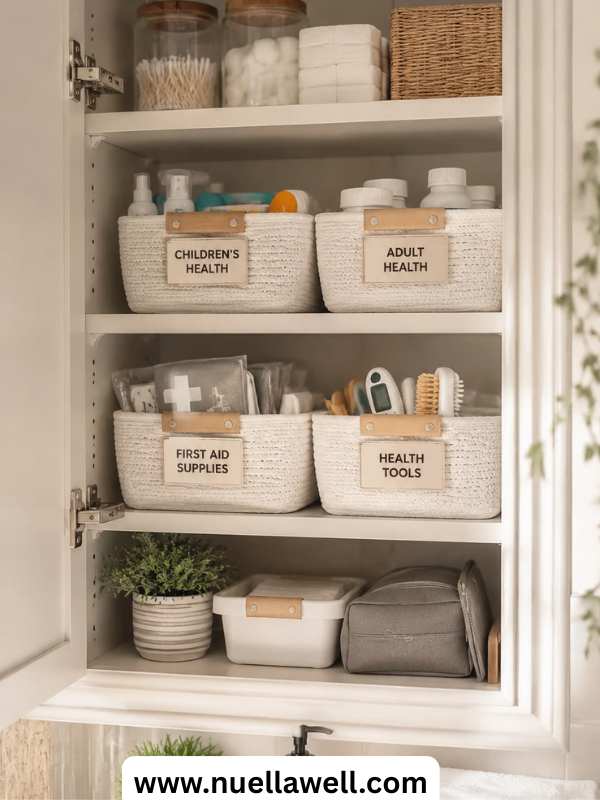
The best organization system is not the most complicated one. It is the one that makes sense for your family and is easy to maintain.
Group Medicines by Purpose
Instead of arranging products based only on size or packaging, organize them according to how your family uses them.
Clear categories can help you quickly identify where items belong.
Organizing children’s medicines into separate categories can also help you create smoother family routines.
Some useful categories include:
Children’s Health Supplies
Create a separate area for items used by children.
This section may include:
- Child-specific health products
- Prescribed medicines
- Allergy-related supplies
- Other items your child regularly needs
Keeping children’s supplies together can help reduce confusion, especially when different products look similar.
Adult Medicines
Create another section for products used by adults in your household.
This may include:
- Personal medicines
- Regular prescriptions
- Common health supplies
Separating adult and children’s items makes it easier to identify products quickly.
First Aid Supplies
First aid items are often needed unexpectedly, so they should have their own easy-to-find section.
This area may include:
- Bandages
- Gauze supplies
- Wound care items
- Other first aid materials suitable for your family
When these supplies are grouped together, you do not need to search through medicine bottles during a stressful moment.
Health Tools and Equipment
Small health tools can easily become misplaced when they are stored randomly.
Consider creating a section for items such as:
- Thermometers
- Measuring devices
- Health tracking tools
- Other family health equipment
Keeping these items together makes them easier to locate when needed.
Create Simple Labels
Labels can make your organization system easier for everyone in your home to follow.
You do not need expensive containers. Simple labels on baskets, shelves, or storage areas can help create order.
Examples:
- Children
- Adults
- First Aid
- Daily Health Supplies
- Travel Health Kit
Clear labels are especially helpful when another caregiver, partner, or family member needs to find something.
Step 4: Keep Medicines Clearly Labeled and Organized
After creating simple categories, the next step is making sure every medicine remains easy to identify. Good organization is not only about where you place products. It is also about making sure important information stays available when you need it.
During stressful moments, small details matter. A clear label can help you quickly understand what a product is, who it belongs to, and what information you need before using it.
Keep Medicines in Their Original Containers
Whenever possible, keep medicines in their original labeled packaging.
The original container provides important information such as:
- Medicine name
- Instructions for use
- Strength or concentration
- Expiry information
- Storage instructions
- Important product details
Removing medicines from their original packaging may make them harder to identify later, especially when multiple products look similar.
Avoid Mixing Different Medicines Together
While combining products into one container may seem like a way to save space, it can create confusion.
You may forget:
- Which medicine is which
- Who the product belongs to
- How it should be used
- Whether it is still suitable to use
Keeping each product clearly identified makes your organization system safer and easier to manage.
Use Storage Containers Around Your Medicines
You can create an organized cabinet without changing how medicines are packaged.
Helpful ideas include:
- Using labeled baskets
- Grouping similar items together
- Creating separate sections for different family members
- Keeping frequently used supplies easy to access
The containers organize the space. The labels on the medicines provide the important details.
Create a System Everyone Understands
A family medicine cabinet may be used by more than one person.
Your partner, babysitter, grandparent, or another caregiver may need to find health supplies at some point. A clear system helps everyone understand:
- Where items are stored
- Which section they belong to
- Where important information can be found
This reduces confusion and prevents one person from becoming the only person who knows how everything works.
Review Labels During Your Regular Checks
Organization is not a one-time activity. During your regular medicine cabinet reviews, check that:
- Labels are still readable
- Products are stored correctly
- Items are still needed
- Information is easy to find
Small maintenance habits prevent your system from becoming overwhelming again.
A clearly labeled medicine cabinet gives busy moms confidence. Instead of searching through unknown products, you have a system that helps you find what you need and make informed decisions.
The next step is creating a simple family medication record so important health information is not stored only in your memory.
Step 5: Create a Family Medication Record
One of the easiest ways to reduce the mental load of managing family health is to create a simple family medication record.
Many moms carry important health details in their heads. They remember which child takes which medicine, when a prescription was started, where a health product is stored, and which healthcare provider to contact.
While this information may be easy to remember during normal days, stressful situations can make it harder to recall important details quickly.
A family medication record creates one reliable place where important information can be stored.\
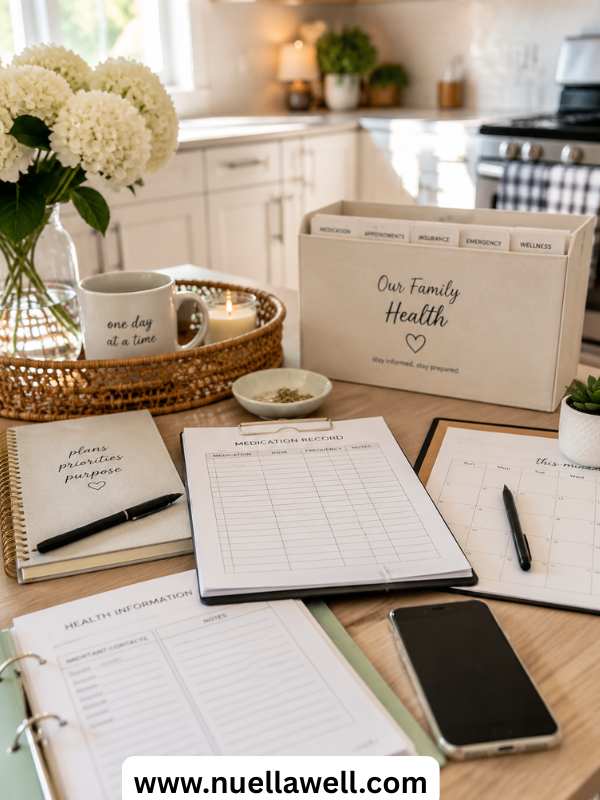
Why a Family Medication Record Helps
A medication record can make it easier to:
- Keep track of current medicines
- Share accurate information with healthcare professionals
- Help caregivers understand family health needs
- Remember important pharmacy and healthcare details
- Prepare for travel or unexpected situations
It is especially useful for families with children, multiple caregivers, or family members who use regular medicines.
What to Include in Your Family Medication Record
Your record does not need to be complicated. A simple format can include:
Family Member Details
- Name
- Date of birth or age
- Important health notes
- Known allergies or sensitivities
Medication Information
- Medicine name
- Who uses it
- Reason it is used
- Instructions provided by a healthcare professional
- Healthcare provider information
Healthcare Contacts
- Primary healthcare provider
- Preferred pharmacy
- Emergency contact details
You can adjust the information depending on your family’s needs.
Keep It Updated
A medication record is only helpful when it reflects your family’s current information.
Review and update it when:
- A medicine is started or stopped
- Prescriptions change
- A child’s health needs change
- Your family changes healthcare providers
- Important contact details change
A quick update takes only a few minutes but can prevent confusion later.
Keep Health Information Secure
A family medication record contains personal health information, so it should be stored carefully.
Choose a location that is:
- Accessible to trusted adults when needed
- Protected from people who should not access private information
The goal is to improve organization while still respecting your family’s privacy.
If your child takes medication during school hours, our guide on Back-to-School Medication Checklist for Busy Moms can help you organize important details before the school year begins.
Step 6: Create a Refill and Replacement System
A well-organized medicine cabinet is not only about what you have today. It is also about knowing when supplies need attention.
Many busy moms have experienced the frustration of discovering that an important health item is missing or running low when it is needed most. A simple refill and replacement system can help you stay prepared without constantly thinking about your medicine cabinet.
Know What Your Family Uses Regularly
Every family has different health needs. Some households may only need basic health supplies, while others may manage regular prescriptions or specific health routines.
Start by identifying the items your family uses more often.
These may include:
- Regular prescribed medicines
- Commonly used health supplies
- First aid materials
- Child-related health products
- Other items recommended for your household
The goal is not to collect everything. It is to understand what your family actually uses.
Create a Simple Check-In Routine
You do not need to inspect your medicine cabinet every week. A quick review several times a year is usually enough to help you stay organized.
Good times to check your supplies include:
- Before school starts
- Before family trips
- During seasonal home resets
- When your family’s health needs change
During your review, look for:
- Items that are running low
- Products that need replacing
- Supplies that are no longer useful
- Information that needs updating
Use Reminders for Regular Medicines
For families managing ongoing medicines, remembering refills can become another responsibility on an already busy schedule.
Instead of keeping everything in your memory, use a simple reminder system.
Options may include:
- Calendar reminders
- Phone alerts
- Pharmacy reminder services
- A family health planner
A reminder system can help you stay organized and reduce last-minute stress.
Avoid Overstocking Your Medicine Cabinet
A common mistake is buying too many products because they seem useful to have “just in case.”
However, an overcrowded cabinet can make organization harder.
Too many products can lead to:
- Difficulty finding what you need
- Confusion about what is current
- More expired items over time
- Unnecessary spending
A smaller, organized collection of useful supplies is often more practical than a cabinet full of forgotten products.
Include Your Family in the System
If another adult helps care for your family, they should understand how your system works.
Make sure trusted caregivers know:
- Where important supplies are stored
- How to find health information
- Who to contact if they have questions
A good system should not depend on only one person remembering everything.
Creating a refill and replacement routine turns medicine organization from a stressful task into a simple family habit. With a few regular checks, you can keep your cabinet useful, organized, and ready for everyday needs.
Preparing your home for your family’s health needs is important at every stage of motherhood. If you are expecting a baby, our postpartum home preparation checklist for new moms can help you organize essential supplies before your baby’s arrival.
Step 7: Review Your Medicine Cabinet Regularly
Organizing your medicine cabinet once is a great first step, but maintaining it is what keeps the system useful. Without occasional reviews, even the most organized cabinet can slowly become cluttered again.
The good news is that maintaining your system does not need to take much time. A few simple checks throughout the year can help you stay prepared and prevent small problems from becoming stressful situations.
Create a Simple Review Schedule
You do not need to wait until your medicine cabinet becomes overwhelming. Choose times that naturally fit into your family routine.
Good times to review your supplies include:
- Before the school year begins
- Before family vacations
- During seasonal home organization
- When your family’s health needs change
- During regular household resets
A short review can help you notice what needs attention.
Check These Areas During Each Review
When reviewing your medicine cabinet, look for:
Expired or Unused Products
Remove items that are no longer needed or products you cannot identify.
Organization System
Ask:
- Are categories still clear?
- Can everyone find what they need?
- Are items being returned to the correct place?
Family Medication Information
Check that important information is still current.
Update details if:
- Medicines have changed
- Contact information has changed
- Family members have new health needs
Health Supplies
Review commonly used supplies and replace items that are missing or no longer useful.
Adjust Your System as Your Family Changes
Your medicine cabinet should grow with your family.
A system that works when your children are young may need changes as they get older. Family routines, health needs, and responsibilities can change over time.
You may need to adjust your organization when:
- Children become more independent
- A family member begins using regular medicines
- Caregivers change
- Your household routine changes
A flexible system is easier to maintain than one that does not match your current life.
Make It Part of Your Home Wellness Routine
Medicine organization does not have to feel like another overwhelming responsibility.
You can connect it with routines you already have, such as:
- A seasonal home reset
- Back-to-school preparation
- Family planning days
- General household organization
Small, consistent habits are easier to maintain than occasional major cleanouts.
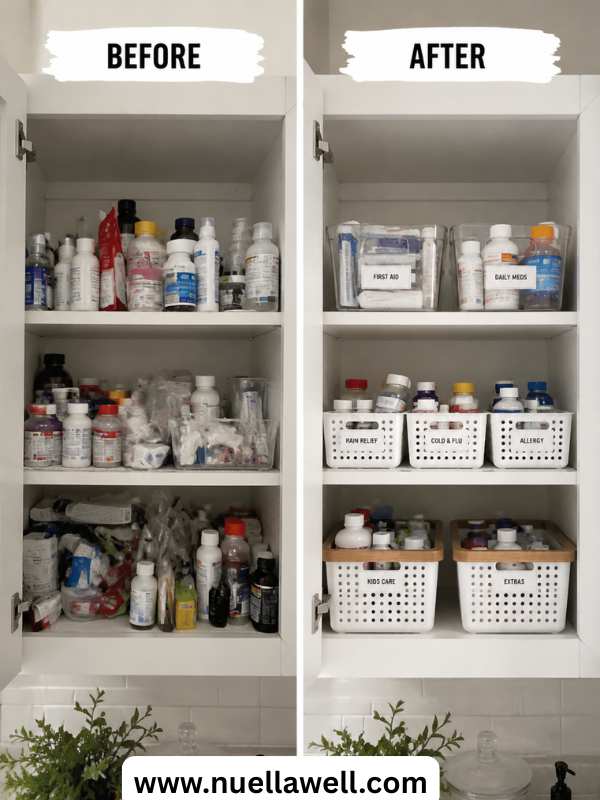
Family Medicine Cabinet Organization Checklist
A simple checklist can make organizing your family medicine cabinet feel much easier. Instead of trying to remember every step, you can use this guide to work through the process one task at a time.
Save this checklist for your next home organization day or medicine cabinet reset.
Family Medicine Cabinet Reset Checklist
Step 1: Prepare Your Space
☐ Choose a safe, dry storage location
☐ Gather all medicines and health supplies in one place
☐ Prepare labels or storage containers if needed
Step 2: Review Your Medicines
☐ Check expiry dates
☐ Remove products that are no longer needed
☐ Separate items you are unsure about and ask a pharmacist if needed
☐ Make sure medicines are stored in their original labeled containers
Step 3: Create Simple Categories
☐ Create a children’s health section
☐ Create an adult medicine section
☐ Organize first aid supplies separately
☐ Store health tools together
☐ Label storage areas clearly
Step 4: Improve Safety and Organization
☐ Store medicines in a safe location
☐ Keep medicines away from young children
☐ Return products to their proper place after use
☐ Make sure caregivers understand your system
Step 5: Create Your Family Medication Record
☐ List important family health information
☐ Record current medicines
☐ Add healthcare provider details
☐ Add pharmacy contact information
☐ Update information when changes happen
Step 6: Maintain Your System
☐ Set reminders for regular medicine checks
☐ Review supplies before school starts
☐ Review supplies before family travel
☐ Replace items that are running low
☐ Remove unnecessary products regularly
A medicine cabinet does not need to look perfect. It simply needs to work for your family.
Frequently Asked Questions About Family Medicine Cabinet Organization
1. How often should I organize my family medicine cabinet?
A regular medicine cabinet review can help your family stay organized and prepared. The exact timing depends on your household, but many families find it helpful to check their supplies a few times each year.
Good times to review your medicine cabinet include:
- Before the school year begins
- Before family travel
- During seasonal home organization
- When your family’s health needs change
Regular checks can help you notice expired products, missing supplies, and items that are no longer needed.
Organizing your family’s health information is one part of creating a more prepared home. A family command center system can help you keep important health details, appointments, and household information organized in one place.
2. Where is the best place to store medicines at home?
The best storage location depends on your home, but medicines should generally be kept in a place that is cool, dry, and suitable for your family’s needs.
Choose an area that:
- Protects medicines from heat and moisture
- Keeps them away from young children
- Allows responsible adults to access them when needed
Many families choose a secure cabinet or storage area outside high-moisture areas such as bathrooms.
3. Should I separate children’s medicines from adult medicines?
Separating children’s and adult medicines can make your system easier to manage.
A clear organization system helps you quickly identify:
- Which products are for children
- Which products are for adults
- Where specific supplies belong
This can be especially helpful in homes with multiple family members or caregivers.
4. What should I do with expired medicines?
Expired or unwanted medicines should not remain in your medicine cabinet simply because they may be needed someday.
The safest disposal method depends on where you live. Some areas have medication take-back programs or specific disposal instructions.
If you are unsure what to do with a medicine, ask your pharmacist for guidance.
5. Should medicines be removed from their original containers?
Keeping medicines in their original labeled containers helps preserve important information, such as the product name, instructions, and expiry details.
Instead of transferring medicines into different containers, organize them using:
- Labeled baskets
- Storage bins
- Separate sections
- Shelves or dividers
This keeps your cabinet organized while maintaining important product information.
6. How can I organize medicines when several family members use them?
Start with a system that matches your family.
You can organize by:
- Family member
- Purpose
- Frequency of use
- Health supply category
For example, you may have separate areas for children’s supplies, adult medicines, first aid items, and health tools.
The simpler the system, the easier it is for everyone to follow.
7. What information should I include in a family medication record?
A family medication record can include helpful details such as:
- Family member names
- Current medicines
- Healthcare provider information
- Pharmacy contact details
- Important health notes
Keep the information secure and update it whenever your family’s health needs change.
8. How can I prevent my medicine cabinet from becoming cluttered again?
The easiest way to prevent clutter is to create small habits.
Try:
- Returning products to the same location after use
- Reviewing supplies regularly
- Removing unnecessary items during home resets
- Keeping categories simple
A good system should be easy enough to maintain even during busy seasons of life.
9. Should I keep medicines from previous illnesses?
It is important to be careful about keeping medicines from previous illnesses without professional guidance.
Health needs can change over time, and a product that was appropriate in one situation may not be appropriate later.
If you are unsure about an unused medicine, speak with your pharmacist or healthcare professional.
10. What is the easiest first step to organize my medicine cabinet?
Start with one simple action: remove everything you no longer need.
Then:
- Review what remains.
- Group similar items together.
- Create clear categories.
- Choose a storage system that works for your family.
Small changes can make your medicine cabinet safer and easier to manage.

Conclusion
Your family medicine cabinet may seem like a small part of your home, but the way you manage it can make a meaningful difference when your family needs support.
For busy moms, there are already many responsibilities to remember every day. School schedules, meals, appointments, work, and household tasks can quickly fill your mental space. Creating a simple medicine organization system removes some of the uncertainty that comes with managing family health.
A safer medicine cabinet does not require a perfect setup or expensive storage solutions. It starts with small, practical steps:
- Knowing what health supplies you have
- Keeping medicines clearly identified
- Removing products that are no longer needed
- Creating a system your family can follow
- Reviewing your supplies regularly
The goal is not to prepare for every possible situation. It is to create a home environment where you feel more confident and less overwhelmed when health needs arise.
As a pharmacist, I believe that good medication habits begin with simple everyday choices. When families understand what they have, keep important information organized, and know when to seek professional guidance, they can make more informed decisions about their health.
Remember, organization is not about creating a perfect medicine cabinet. It is about creating a system that supports your real life.
Start small. Clear one shelf. Remove a few unnecessary items. Create categories that make sense for your family. Over time, these simple habits can transform your medicine cabinet from a cluttered storage space into a useful family health resource.
Small organizational habits, combined with your prepare for calmer evenings routine, can create a home that runs smoothly.
A little preparation today can help create a calmer, safer, and more organized home tomorrow. You can also prepare your medicine cabinet before cold and flu season
Continue reading:
- Back-to-School Medication Checklist for Busy Moms: A Pharmacist’s Guide
- Common Medication Mistakes Moms Make: A Pharmacist Guide
- Healthy Habits for Every Busy Mom
- After-School Routine for Busy Moms That Actually Works
Disclaimer
As a pharmacist, I share evidence-based health and wellness information for educational purposes only. This content is not intended to replace professional medical advice, diagnosis, or treatment. Always consult your healthcare provider regarding any questions about your health, medications, or well-being. Read our full Medical Disclaimer.

