
This Christmas preparation checklist for busy moms includes 25 practical things you can do before Christmas Day, covering gifts, food, family plans, home organization, kids’ activities, travel, and those small last-minute details that are easy to forget.
Christmas can be one of the most exciting times of the year, but for busy moms, it can also become one of the most demanding. Between buying gifts, planning meals, attending school events, decorating the house, organizing family visits, preparing for travel, and trying to keep everyday routines running, the weeks before December 25 can quickly feel overwhelming.
The problem is not always that there is too much to do. Often, it is that everything seems to need attention at the same time.
That is where a simple Christmas preparation checklist can make a real difference.
Instead of trying to remember every small task in your head, you can spread your preparations across several weeks and focus on what matters most first. A clear checklist helps you see what needs to be done, what can wait, and what you can delegate to someone else.
You do not need to complete everything in one weekend, and you certainly do not need to create a “perfect” Christmas. The goal is simply to make the season feel more organized, manageable, and enjoyable for you and your family.
Start with the tasks that are most urgent, work through the checklist at your own pace, and give yourself permission to keep Christmas simple.
Printable Christmas Preparation Checklist for Busy Moms
A printable Christmas preparation checklist makes it easier to keep track of important tasks without relying on memory. Instead of searching through notes or trying to remember what still needs to be done, you can keep everything in one place and check off each task as you complete it.
You can print this checklist and place it in your planner, pin it to your family command center, or keep a copy somewhere visible at home.
Free Christmas Preparation Checklist
Want to get ready for Christmas without keeping every task in your head? Download this free printable Christmas preparation checklist for busy moms and keep your holiday plans organized in one convenient place.
Want to keep your Christmas plans organized without trying to remember everything?
I have created a free 3-page Christmas Preparation Checklist for Busy Moms to help you stay on top of the important tasks before December 25.
Your free checklist will help you:
- Keep track of essential Christmas preparations.
- Plan gifts and groceries without unnecessary last-minute shopping.
- Organize household tasks and family activities.
- Check off completed tasks as December 25 approaches.
DOWNLOAD THIS FREE CHRISTMAS PREPARATION CHECKLIST
print it out, and keep it somewhere visible so you can refer to it throughout the holiday season.
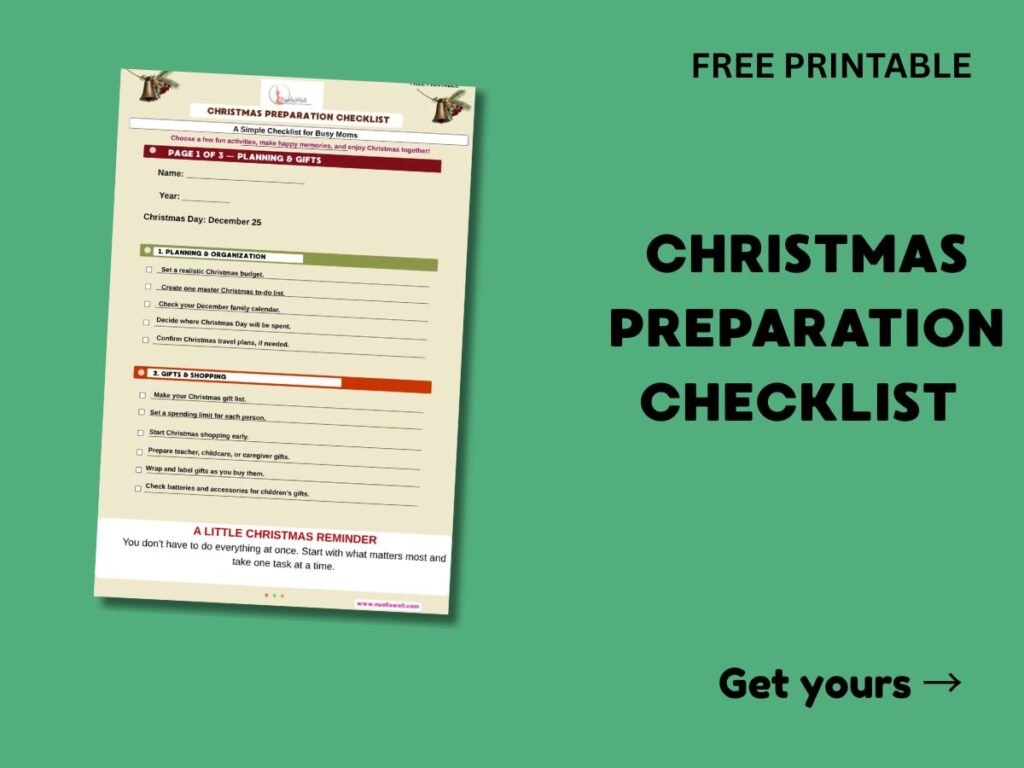
DOWNLOAD YOUR FREE CHECKLIST
Christmas Preparation Checklist for Busy Moms: 25 Things to Do Before December 25
Let’s start with the 25 practical tasks that will help your family prepare for Christmas. Later in this guide, you’ll find a simple preparation timeline to help you decide when to complete them.
You do not need to complete all 25 tasks in one sitting. Work through them at your own pace, starting with anything that has an early deadline or requires advance booking. If a task does not apply to your family, simply skip it.
Christmas Planning and Organization
1. Set a Realistic Christmas Budget
Before you start shopping, decide how much your family can comfortably spend on Christmas. Include more than just gifts. Food, decorations, travel, children’s activities, school events, and family gatherings can all add to the total.
Divide your budget into categories so you can see how much is available for each expense. If you are celebrating with relatives, discuss shared costs or meal contributions early.
It also helps to leave a small amount for unexpected expenses. A realistic budget gives you room to enjoy the season without creating unnecessary financial pressure in the new year.
A realistic budget can help you account for gifts, food, travel, and other seasonal expenses. Use this guide to create a holiday spending plan and reduce the risk of overspending.
2. Create One Master Christmas To-Do List
Instead of keeping reminders in several notebooks, phone apps, and scraps of paper, put all your Christmas tasks in one place. This could be a notebook, a digital planner, or a printable checklist.
Divide your list into simple categories, such as gifts, food, home, children, travel, and family events. Add deadlines when necessary, and mark tasks as completed as you go.
Having one master list makes it easier to see what still needs attention and reduces the mental effort of trying to remember every detail.
3. Check Your December Family Calendar
December can fill up quickly with school performances, workplace celebrations, family visits, community events, and holiday appointments. Check your calendar before committing to additional plans.
Record important dates, times, locations, and any preparation required. For school events, note whether your children need special clothing, costumes, snacks, or small gifts.
Review the calendar with your partner or other family members so everyone understands the arrangements. This simple step can help prevent overlapping commitments and last-minute rushing.
4. Decide Where Christmas Day Will Be Spent
If your family celebrates with relatives or friends, decide early whether you will host, travel, or divide the day between different households.
Discuss meal arrangements, arrival times, transportation, and any contributions guests are expected to bring. If you are hosting, consider how many people your home can comfortably accommodate.
Agreeing on the main arrangements early makes it easier to plan food, shopping, and household preparation. It can also help you avoid feeling pressured to attend several gatherings in one day.
5. Confirm Christmas Travel Plans
If you will be travelling over Christmas, arrange the important details as early as possible. Check transportation options, accommodation, departure times, and any reservations you need.
Families travelling with children may also need to plan snacks, entertainment, suitable clothing, medicines they normally use, and essential travel documents.
If you are driving, check your vehicle’s condition before departure and allow extra time for traffic. If relatives are visiting you, confirm their arrival dates and sleeping arrangements.
Keeping travel information together in one place makes it easier to check the details when the holiday gets closer.
Christmas Gift Preparation
6. Make Your Christmas Gift List
Write down everyone you plan to buy a gift for before you start shopping. This may include immediate family, relatives, friends, teachers, childcare providers, and anyone else you would like to remember.
Beside each name, record a gift idea, your spending limit, and whether the gift has been purchased or wrapped.
A written list helps you avoid buying several gifts for one person while accidentally forgetting someone else. It also gives you time to think about useful, thoughtful presents rather than making rushed purchases.
7. Set a Spending Limit for Each Person
Once your gift list is ready, decide how much you can spend on each person. You do not need to spend the same amount on everyone, but having a clear limit helps you stay within your overall budget.
Consider homemade gifts, books, practical items, shared experiences, or simple treats when they suit the recipient. Thoughtfulness does not depend on the price of a gift.
Keep track of your spending as you shop, especially if you are buying for a large family. This makes it easier to adjust your plans before you exceed your budget.
8. Start Christmas Shopping Early
Begin shopping for gifts that may take time to find, require personalization, or need to be delivered. Shopping gradually also gives you more time to compare options and make thoughtful choices.
Before purchasing anything, check your gift list and budget. Avoid buying items simply because they are on sale if they do not fit your plans.
For online orders, review estimated delivery dates and keep confirmation details somewhere accessible. If a gift is delayed or unavailable, you will have more time to choose an alternative.
9. Buy Teacher, Childcare, and Caregiver Gifts
If you plan to give gifts to teachers, childcare providers, or other caregivers, add them to your list early. School and childcare schedules may mean that gifts need to be ready before the final week of term.
A handwritten note, a homemade card, or a modest gift can be a thoughtful way to show appreciation. Check any school or workplace gift policies before making arrangements.
Planning these gifts in advance prevents them from becoming another last-minute task when you are already preparing for Christmas.
10. Wrap and Label Gifts as You Buy Them
Rather than leaving every present until Christmas Eve, wrap gifts in small batches as you purchase them. Label each package clearly with the recipient’s name.
Keep a separate note of gifts that have been purchased and wrapped, particularly if you have several children or are buying for extended family.
Store wrapped gifts in a safe, dry place where they will not be damaged. If you have young children at home, choose a storage location that keeps presents and small packaging accessories out of their reach.
11. Check Batteries and Accessories for Children’s Gifts
Before Christmas morning, check whether toys and electronic gifts need batteries, chargers, assembly, or additional accessories.
Read the product instructions and age recommendations, and make sure any required components are included. If a toy needs assembly, consider completing it ahead of time when appropriate.
This small check can prevent disappointment when a child opens a gift that cannot be used immediately. Keep batteries and small components safely stored away from young children.

Christmas Food and Meal Preparation
12. Decide on Your Christmas Menu
Plan what your family will eat on Christmas Day, including breakfast, the main meal, snacks, desserts, and drinks.
Choose dishes that suit your family’s preferences, budget, available cooking equipment, and the time you have. You do not need an elaborate menu to make the day special.
If relatives are joining you, ask about dietary requirements and agree on who will prepare each dish. A manageable menu is easier to shop for, prepare, and serve without spending the entire day in the kitchen.
13. Make a Christmas Grocery List
Once your menu is decided, write down the ingredients and supplies you will need. Check your cupboards, refrigerator, and freezer before shopping so you do not buy items you already have.
Separate the list into categories such as pantry ingredients, fresh produce, chilled foods, frozen foods, drinks, and household supplies.
You can also divide purchases by when they need to be bought. This helps you pick up shelf-stable ingredients early while leaving fresh items until closer to Christmas.
14. Buy Non-Perishable Groceries Early
Purchase suitable pantry ingredients and other shelf-stable items before the busiest shopping days. Depending on your menu, these may include flour, sugar, spices, canned goods, cooking oil, baking ingredients, snacks, drinks, and unopened sauces.
Check expiry dates, storage instructions, and the quantities you actually need. Store everything in a clean, dry place and keep items that require refrigeration or freezing at the correct temperature.
Buying these supplies early spreads out your shopping and reduces the number of things you need to remember during Christmas week.
15. Prepare Freezer-Friendly Foods
If you enjoy cooking ahead, identify a few dishes that can be safely prepared and frozen in advance. Depending on your menu, options may include cookies, muffins, sauces, casseroles, or selected meal components.
Choose recipes that freeze and reheat well, and follow reliable food-safety guidance for cooling, packaging, freezing, thawing, and reheating. Label containers with their contents and preparation dates.
You do not need to fill your freezer with weeks of food. Even preparing one or two suitable items can save time during a busy period.
If you are preparing food ahead of Christmas Day, review this food safety and leftovers guidance to learn how to refrigerate, freeze, and reheat leftovers safely.
16. Plan Easy Meals for the Days Before Christmas
Christmas preparation can leave little time for everyday cooking. Plan a few simple meals for the days leading up to December 25 so your family is not relying on expensive takeaways or rushed decisions.
Consider meals that use familiar ingredients, leftovers safely stored from earlier meals, or ingredients you can prepare ahead. Keep breakfast and lunch options simple, especially on days when you have shopping or school events.
Remember that the days after Christmas matter too. Having a few easy meal ideas ready can help your family return to its normal routine with less effort.

Home Preparation
17. Declutter the Main Living Areas
Before bringing out decorations or preparing for guests, spend a little time clearing the areas your family uses most. Focus on the living room, dining area, kitchen counters, and entrance rather than trying to clean every room in the house.
Put away items that have accumulated, return misplaced belongings to their usual homes, and remove rubbish or unwanted packaging.
You can tackle one small area at a time instead of turning decluttering into a major weekend project. The aim is to make your home more comfortable and functional, not to achieve perfection.
18. Make Space for New Toys and Gifts
If your children are likely to receive new toys, books, or games, check their existing belongings before Christmas.
Help them identify items they no longer use, and decide whether suitable toys can be donated, passed on, or stored elsewhere. Involve children in age-appropriate decisions without making them feel that they must give away their favourite possessions.
Check storage baskets, shelves, and toy boxes to see where new items could fit. Creating space in advance makes it easier to put gifts away and maintain a more organized home after Christmas.
19. Check Christmas Decorations Before Decorating
Before decorating your home, unpack your existing decorations and check their condition. Look for broken ornaments, missing hooks, damaged wires, or lights that do not work.
Test electrical decorations according to the manufacturer’s instructions, and replace damaged items rather than attempting unsafe repairs. Keep decorations, cords, and small detachable pieces away from young children and pets.
Make a short shopping list of anything you genuinely need. Using decorations you already own can save money and reduce unnecessary shopping.
20. Prepare the Guest Room or Sleeping Space
If relatives or friends will be staying overnight, prepare their sleeping arrangements before the final week.
Check that you have clean bedding, pillows, towels, and enough space for guests to store their belongings. Make sure the room is comfortable and that pathways are clear.
If you do not have a spare bedroom, consider how you can make a shared space more practical for the duration of the visit. Confirm sleeping arrangements with guests so you know what is needed rather than trying to accommodate everyone at the last minute.
21. Restock Basic Household Supplies
Christmas can mean more cooking, more visitors, and more household waste. Check your supplies of everyday essentials before the busiest shopping days.
Depending on your household, you may need toilet paper, hand soap, dishwashing liquid, dishwasher tablets, bin bags, paper towels, laundry detergent, or cleaning products.
Check what you already have before buying more, and keep cleaning products stored safely away from children. Having essential supplies available can prevent unnecessary trips to the shops during the holiday.
As you restock household essentials, review these cold and flu season preparation tips for families to help organize the supplies and routines you may need during winter.
Kids and Family Christmas Preparation
22. Choose a Few Family Christmas Activities
Decide which activities your family would genuinely enjoy rather than trying to fit every festive idea into December.
You might choose a Christmas movie night, baking together, decorating the tree, visiting a local display of Christmas lights, or making homemade ornaments.
Check your family calendar and choose activities that fit your time and budget. Simple traditions can be just as meaningful as elaborate outings, especially when everyone has a chance to relax and participate.
23. Prepare Christmas Activities for Children
If your children will be home during the school holidays, prepare a few easy activities in advance. This can help on days when you need to cook, work, run errands, or take a break.
Ideas include colouring sheets, simple crafts, age-appropriate puzzles, reading time, baking with adult supervision, and Christmas-themed games.
Gather the supplies you need and store them together so they are easy to find. You do not need a planned activity for every hour. Leave space for free play, rest, and ordinary family time.
24. Prepare Outfits for Christmas Events
Check what your family will need to wear for school performances, family gatherings, religious services, travel, and Christmas Day.
Try on children’s clothes early to make sure they still fit. Check shoes, coats, accessories, and any special clothing required for school events.
Wash or prepare outfits in advance and keep them together where practical. You can also choose comfortable clothing for Christmas Day rather than buying something new if suitable options are already available.

Final Christmas Week Preparation
25. Create a Christmas Eve Checklist
Use the final day before Christmas to check the essentials rather than trying to complete every unfinished project.
Your Christmas Eve checklist might include finishing essential gift wrapping, setting out clothes for the next day, preparing breakfast items, checking the meal schedule, charging phones, and confirming any remaining travel arrangements.
If you have children, prepare anything needed for family traditions and make sure gifts are stored safely. Check that refrigerated foods are stored correctly and that any food requiring advance preparation is handled according to safe storage instructions.
Keep the evening as calm as possible. Once the essential tasks are complete, give yourself permission to stop working and enjoy the time with your family.
Why Christmas Feels So Overwhelming for Busy Moms
Christmas often brings extra responsibilities to an already full schedule. Alongside everyday tasks such as preparing meals, caring for children, managing work, and keeping the house running, moms may also be responsible for making the holiday happen.
There are gifts to buy, meals to plan, decorations to put up, school events to attend, and family arrangements to coordinate. Even the small details, such as remembering teacher gifts or checking whether the children have something suitable to wear, can add to the pressure.
Here are some common reasons Christmas preparation can feel overwhelming.
1. Too Many Tasks to Remember
Christmas planning involves dozens of little jobs, and many of them have deadlines. You might remember to buy the presents but forget the batteries they need, or plan the Christmas dinner without checking whether you have all the ingredients.
Keeping every detail in your head makes it harder to know what needs attention first. A written checklist gives you one place to record tasks, track progress, and see what remains to be done.
2. Balancing Christmas With Everyday Responsibilities
December does not stop normal family life. School runs, work commitments, laundry, grocery shopping, appointments, and childcare continue even when holiday preparations are underway.
Trying to fit everything into the same day can leave you feeling as though you are constantly catching up. Spreading Christmas tasks across several weeks can help you avoid doing everything at the last minute.
3. Feeling Responsible for Everyone’s Christmas Experience
Many moms feel pressure to make Christmas special for every member of the family. This might mean choosing thoughtful gifts, preparing favorite meals, organizing activities for the children, and making time for relatives.
While these things can be meaningful, they can also become exhausting when one person feels responsible for all of them. Involving your partner, older children, or other family members can make preparations more manageable.
When you are responsible for remembering everyone’s gifts, meals, appointments, and plans, it can help to recognize the signs you are carrying too much mental load as a mom.
4. Unexpected Expenses and Last-Minute Purchases
Gift shopping, food, decorations, travel, and holiday outings can cost more than expected. Without a clear spending plan, last-minute purchases may put additional pressure on the family budget.
Setting a realistic budget early and keeping track of purchases can help you make decisions with greater confidence.
5. Trying to Make Everything Perfect
It is easy to compare your own Christmas preparations with the elaborate celebrations you see online. You may feel that your home needs more decorations, your meals need to be more impressive, or your children need a full calendar of festive activities.
But a meaningful Christmas does not depend on having a perfectly decorated home or following every holiday tradition. What matters most is creating a celebration that works for your family, your time, and your budget.
If the pressure of holiday preparation leaves you constantly exhausted, it may help to recognize the signs of mom burnout and how to recover before the stress becomes harder to manage.
When Should You Start Preparing for Christmas?
The best time to start preparing for Christmas is before your calendar becomes crowded with school events, family gatherings, shopping trips, and other holiday commitments. For many families, beginning in late October or early November provides enough time to plan gradually instead of rushing through everything in December.
However, you do not need to follow a strict schedule. If you are starting later, focus on the tasks that need the most time or have firm deadlines, then work through the remaining preparations as your schedule allows.
Here is a simple Christmas preparation timeline to help you organize your tasks.
1. Six to Eight Weeks Before Christmas
Focus on planning and early decisions.
This is a good time to establish your budget, decide how you will celebrate, and identify anything that needs to be booked or ordered in advance.
Use this period to:
- Set your Christmas budget.
- Create a master Christmas to-do list.
- Make a gift list and estimate how much you will spend.
- Check the December family calendar for school events and gatherings.
- Confirm travel plans or accommodation if needed.
- Discuss Christmas Day arrangements with family members.
Getting these decisions out of the way early gives you a clearer picture of what lies ahead.
2. Four to Six Weeks Before Christmas
Focus on shopping and organizing the main details.
With your plans in place, you can begin working through the practical tasks. Shopping early may also give you more options and time to find alternatives if an item is unavailable.
During this period:
- Start buying Christmas gifts.
- Purchase teacher and caregiver gifts.
- Check decorations and replace damaged items where necessary.
- Decide on your Christmas menu.
- Make a preliminary grocery list.
- Choose a few Christmas activities for the children.
- Arrange any deliveries or services you will need.
You do not have to finish every task immediately. The goal is to make steady progress.
3. Two to Three Weeks Before Christmas
Focus on completing major preparations.
By this stage, you should have a good idea of what you still need to do. Use your checklist to identify unfinished tasks and prioritize those that could become difficult to complete closer to Christmas.
Consider:
- Finishing most of your gift shopping.
- Wrapping and labeling purchased gifts.
- Buying non-perishable groceries.
- Preparing freezer-friendly meals or baked goods.
- Decluttering the main living areas.
- Making space for new toys and gifts.
- Preparing a guest room or sleeping area if family will visit.
- Checking children’s outfits for Christmas events.
Completing these tasks now can leave you with fewer responsibilities during the final week.
4. One Week Before Christmas
Focus on final details and household readiness.
The week before Christmas is a good time to review your checklist and deal with anything that remains outstanding. Avoid adding unnecessary projects simply because they seem festive or appealing.
Your priorities may include:
- Buying fresh groceries.
- Checking the Christmas menu and meal preparation schedule.
- Finishing gift wrapping.
- Cleaning the areas your family will use most.
- Restocking essential household supplies.
- Preparing outfits and children’s activity supplies.
- Confirming travel times and family arrangements.
- Planning simple meals for the days surrounding Christmas.
Leave some breathing room in your schedule for unexpected changes.
5. Christmas Eve
Focus on the essentials and give yourself permission to stop.
Christmas Eve should not be a day for completing every task you postponed throughout the month. Instead, use it to take care of a few final details that will make Christmas morning easier.
For example:
- Set out clothes for the next day.
- Prepare breakfast items where possible.
- Finish any essential wrapping.
- Check that gifts are ready.
- Charge phones and cameras.
- Prepare stockings or other family traditions.
- Confirm any remaining travel arrangements.
- Put away unnecessary clutter in the main living areas.
Once the essentials are handled, allow yourself time to rest and enjoy the evening.
Remember: This timeline is a guide, not another list of expectations to meet. If you have less time, adjust it to fit your circumstances. A few well-chosen preparations can make a difference, even when you cannot do everything in advance.

How Busy Moms Can Make Christmas Preparation Easier
Christmas preparation becomes more manageable when you turn vague plans into small, specific actions. Instead of trying to organize the entire holiday at once, use these practical strategies to save time, control spending, and reduce last-minute stress.
1. Use a 15-Minute Christmas Planning Session
Choose one evening each week to review your Christmas checklist. Set a timer for 15 minutes and focus only on the next steps.
During that time:
- Check your calendar for school events, work commitments, and family visits.
- Identify the three tasks that need attention first.
- Check your remaining Christmas budget.
- Add any missing groceries, gifts, or supplies to your shopping list.
- Assign each task a day when you can realistically complete it.
For example, if you need to buy gifts, order groceries, and prepare the house for visitors, you might schedule gift shopping for Saturday, grocery shopping for Wednesday, and a 20-minute living room tidy for Thursday evening.
When the 15 minutes are over, stop planning and return to your normal routine.
2. Keep Your Christmas Shopping in One Place
Avoid keeping separate shopping lists in text messages, notebooks, and your memory. Create one list on your phone or use the printable checklist in this article.
Divide it into four sections:
- Gifts: names, gift ideas, spending limits, and purchase status.
- Food: ingredients, quantities, and items already in the pantry.
- Home: decorations, cleaning supplies, and guest essentials.
- Children: outfits, school activities, and holiday supplies.
Before buying anything, check what you already have at home. You may discover that you have enough wrapping paper, gift bags, decorations, or baking ingredients from previous years.
This simple check helps prevent duplicate purchases and unnecessary spending.
If you need one place to keep track of calendars, shopping lists, school reminders, and family tasks, these family command center ideas for busy moms can help you organize your household information
3. Set a Spending Limit Before Buying Gifts
Decide how much you can comfortably spend on Christmas before browsing shops or online stores.
For example, if your total gift budget is £200, you could allocate £100 to children’s gifts, £50 to close family, £20 to teacher or caregiver gifts, and keep £30 for delivery costs or unexpected expenses. Adjust these amounts to your circumstances, and do not feel obliged to use this exact breakdown.
Once you have set your limits:
- Write a maximum amount beside each person’s name.
- Compare prices before purchasing expensive items.
- Avoid buying extra gifts simply because they are on sale.
- Consider homemade gifts or shared family presents where appropriate.
- Track each purchase so you know how much money remains.
If your budget is tight, reduce the number or cost of gifts rather than relying on credit to fund the celebration.
4. Prepare Food in Stages Instead of All at Once
You do not need to cook everything on Christmas Eve. Divide your food preparation into tasks that can be completed safely ahead of time.
One to two weeks before Christmas:
- Check your recipes and confirm the number of people you are feeding.
- Review pantry supplies and buy suitable non-perishable ingredients.
- Make space in your fridge and freezer.
- Prepare and freeze dishes that freeze well, following appropriate food-storage guidance.
Two to three days before Christmas:
- Wash and prepare suitable vegetables.
- Make sauces, desserts, or other dishes that can safely be prepared ahead.
- Defrost frozen food in the refrigerator, allowing enough time.
- Check which ingredients still need to be purchased.
Christmas Eve:
- Prepare only the dishes that need to be made fresh or completed the day before.
- Set out serving dishes and utensils.
- Write down the cooking order and approximate oven times.
For instance, if you plan to serve roast vegetables, rice, chicken, and dessert, identify which dishes can be prepared early and which need attention on Christmas Day. Follow safe refrigeration, freezing, and reheating instructions for each food.
5. Use a 20-Minute Home Reset
Instead of deep-cleaning the entire house before Christmas, concentrate on the spaces your family and guests will use most.
Set a 20-minute timer and work through these tasks:
- Clear the main living room surfaces.
- Put toys, shoes, and loose items into their usual storage spaces.
- Wipe kitchen counters and the dining table.
- Check that the bathroom has toilet paper, soap, and a clean hand towel.
- Empty the rubbish if the bins are nearly full.
If guests are staying overnight, prepare their sleeping space separately on another day. Clean less frequently used rooms only if they need attention.
This approach keeps your home comfortable without turning holiday preparation into a full-house cleaning project.
6. Give Children Small Jobs They Can Finish
Children are more likely to help when they know exactly what to do. Give each child one task suited to their age and abilities rather than asking everyone to tidy everything.
Examples include:
- Younger children: put books back on a shelf, place gift tags beside the wrapping paper, or choose a Christmas story.
- School-age children: sort decorations, organize their wish lists, or help put away toys.
- Older children and teenagers: wrap simple gifts, help prepare a shopping list, or arrange the dining table.
Show them what you expect, provide the supplies they need, and accept that the result may not look perfect. Keep sharp tools, hot surfaces, and other hazards away from young children.
7. Combine Errands to Save Time
Before leaving home, check whether several tasks can be completed on the same trip.
For example, you could buy groceries, collect a parcel, and purchase gift-wrapping supplies during one shopping trip instead of making three separate journeys.
To make the trip more efficient:
- Check store opening hours before leaving.
- Group items by shop or location.
- Keep receipts together.
- Set a spending limit for unplanned purchases.
- Order bulky or suitable non-perishable items for delivery when affordable.
If you are shopping with children, choose a time that works with their meals and rest periods, and keep the list short enough to manage.
8. Prepare a Backup Plan for Busy Days
Work deadlines, school activities, tired children, and unexpected changes can disrupt your Christmas schedule. Keep a simple backup plan for the days when you have less time or energy than expected.
Choose two or three easy meals, such as soup and bread, pasta with a simple sauce, or a freezer meal prepared earlier. Keep essential household supplies available, and identify which Christmas tasks can be postponed without affecting your plans.
If an activity becomes too difficult to organize, replace it with something simpler. A family movie, a Christmas story, or an evening of board games can be just as enjoyable as an elaborate outing.
Keeping a simple daily routine for busy moms with kids can help your family maintain some consistency even when holiday plans change.
9. Set a Clear Limit on Christmas Commitments
Look at your December calendar before accepting invitations or volunteering for additional responsibilities.
If your family already has a school event, a work commitment, and a weekend visit planned, consider whether another activity will leave enough time for rest and essential preparations.
You can reply with a simple explanation that you are unable to attend this time. You do not need to provide a lengthy justification.
Choose the events that are meaningful to your family, and leave some days free from additional commitments.
10. Create a Christmas Eve Essentials Basket
Use one basket, box, or designated area to keep the small items you are likely to need on Christmas Eve and Christmas morning.
Depending on your plans, include:
- Scissors and tape for last-minute gift wrapping.
- Spare batteries, if needed for gifts.
- Gift tags or cards that still need to be attached.
- Any small decorations or accessories you plan to use.
- A written note of essential morning tasks.
Keep the basket somewhere accessible but out of reach of young children if it contains sharp tools or small parts.
Prepare it a day or two ahead, then check it once on Christmas Eve. This prevents a last-minute search through drawers and cupboards.
Choose Three Actions to Start With
You do not need to adopt every strategy immediately. Start with three practical actions this week:
- Write down your Christmas budget and outstanding purchases.
- Choose a 15-minute planning session and identify your next three tasks.
- Schedule one short home reset or food-preparation session.
Once these are in place, add other strategies as needed.
The aim is to make Christmas easier to manage, not to create a more complicated routine. A few well-chosen actions can save time, prevent unnecessary spending, and leave more room for your family to enjoy the holiday.
Even on your busiest days, you can make room for a short break with these 10-minute self-care ideas for busy moms
Frequently Asked Questions About Christmas Preparation
1. When should I start preparing for Christmas?
Starting six to eight weeks before Christmas gives you time to plan your budget, arrange travel, shop for gifts, and organize important events. However, you can begin later if necessary. Focus on the tasks with fixed deadlines first, then simplify anything that feels difficult to manage.
2. What should be on a Christmas preparation checklist?
A useful Christmas preparation checklist should cover your budget, gift shopping, food, household tasks, children’s activities, travel arrangements, and Christmas Day plans. Include only the tasks relevant to your family so the checklist remains practical rather than becoming another source of pressure.
3. How can busy moms prepare for Christmas without getting overwhelmed?
Break preparation into smaller tasks and spread them across several weeks. Choose three priorities each week, keep your shopping list in one place, and involve other family members where possible. Avoid adding optional activities when your schedule is already full.
4. What should I do one month before Christmas?
About four weeks before Christmas, confirm your main plans, review your budget, purchase gifts that need extra delivery time, and decide on your Christmas menu. Check decorations, identify household supplies you need, and schedule any travel or guest arrangements that have not yet been finalized.
5. What should I prepare two weeks before Christmas?
Two weeks before Christmas, finish most gift shopping, wrap presents as you go, buy suitable non-perishable groceries, and prepare dishes that can safely be frozen. Check children’s outfits, organize guest sleeping arrangements if needed, and plan simple meals for the days leading up to Christmas.
6. What should I do during the week before Christmas?
Use the final week to complete essential grocery shopping, confirm arrangements, finish gift wrapping, and prepare food that can be made ahead. Set out the items you need for Christmas morning and avoid starting large projects that are not necessary for your celebration.
7. How do I make Christmas less stressful with kids?
Keep activities simple, maintain familiar routines where possible, and give children age-appropriate jobs. Prepare outfits and gifts ahead of time, allow extra time for outings, and avoid scheduling too many events in one day. Children can enjoy familiar traditions without a packed holiday calendar.
8. How can I stay within my Christmas budget?
Decide on your total spending limit before shopping. Set separate amounts for gifts, food, decorations, travel, and other expenses.
Track your purchases as you shop, and check your remaining budget before buying anything extra. Consider affordable homemade gifts, shared experiences, or simpler family traditions to keep costs manageable.
Conclusion
Preparing for Christmas can feel like a lot to manage when you are already balancing work, parenting, household responsibilities, and family commitments. A clear plan can help you stay organized, but the goal is not to complete every task on your list. It is to make the holiday easier to manage and more enjoyable for your family.
Start by setting a realistic budget, choosing your priorities, and spreading essential tasks across the weeks leading up to December 25. Use the Christmas preparation checklist to track gifts, meals, household tasks, and family arrangements. If your schedule changes, adjust your plans rather than putting pressure on yourself to do everything.
Remember that some tasks can wait. You do not need a perfectly decorated home, an elaborate meal, or a full calendar of activities to create meaningful family memories. Simple traditions, shared responsibilities, and time to relax can be just as valuable.
Your next step: Print the FREE CHRISTMAS PREPARATION CHECKLIST and choose three tasks to complete this week. Keep the list somewhere visible so you can update it as your plans develop.
Save this guide to Pinterest so you can return to the checklist and timeline as Christmas approaches. You can also explore more Nuellawell resources for holiday organization, family routines, and practical self-care for busy moms.
Give yourself permission to prepare at a pace that works for your family. Christmas does not have to be perfect to be special.
Disclaimer: As a pharmacist, I share evidence-based health and wellness information for educational purposes only. This content is not intended to replace professional medical advice, diagnosis, or treatment. Always consult your healthcare provider regarding any questions about your health, medications, or well-being.